
Holotropic experience and the art of letting the process unfold
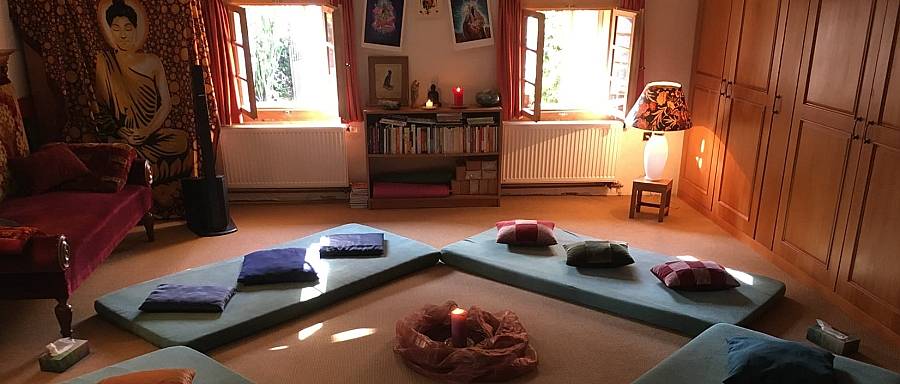
Holotropic breathwork challenges one of the most deeply ingrained habits of modern life: the need to control outcomes. From the very beginning, the method invites participants to enter an experience without a plan, without expectations, and without a predefined goal.
This surrender is not passive. It is an active decision to trust the inner process rather than manage it.
Trust instead of technique
While holotropic breathwork follows a clear structure, the inner journey itself cannot be engineered. Each session unfolds differently, even for the same person. What emerges depends not on intention, but on readiness.
This unpredictability is not a flaw. It is a feature that allows the psyche to surface exactly what needs attention in that moment.
Expanded awareness without escape
A common misconception is that non-ordinary states of consciousness represent an escape from reality. Holotropic breathwork demonstrates the opposite. These states often bring participants into deeper contact with reality—internal reality.
Perceptions may intensify, time may feel altered, but awareness remains present. The experience is immersive, not dissociative.
Encountering inner truth
Many participants describe moments of profound authenticity during holotropic sessions. Layers of social identity fall away, revealing emotions and impulses that feel undeniably real.
This encounter can be gentle or challenging, but it is often accompanied by a sense of recognition—of meeting something long ignored rather than something foreign.
Within a holotrop framework, personal exploration unfolds through the body, emotions, and awareness rather than through intellectual analysis alone.
Why interpretation is secondary
Unlike analytical therapies, holotropic breathwork does not prioritize immediate interpretation. Experiences are allowed to exist without explanation. Meaning often emerges later, organically, as life circumstances shift or insights mature.
This approach prevents premature conclusions and allows deeper integration.
The group field effect
Although the journey is individual, the group context plays an essential role. Breathing in a shared space creates a subtle sense of connection, even without interaction.
Participants frequently report feeling supported simply by the presence of others engaged in their own process. This shared field reduces isolation and increases trust.
Emotional regulation through expression
Holotropic breathwork supports emotional regulation not by suppression, but by completion. When emotions are fully felt and expressed within a safe container, they no longer need to manifest indirectly through stress, tension, or repetitive patterns.
Over time, this leads to increased emotional resilience rather than emotional avoidance.
Integration into daily life
The true measure of a holotropic experience is not the intensity of the session itself, but how it translates into everyday life. Subtle shifts—greater clarity, improved boundaries, reduced reactivity—often signal deep integration.
These changes tend to be stable, not dramatic, and unfold gradually.
A process, not an event
Holotropic breathwork is rarely a one-time experience. Many people return to it at different stages of life, each time encountering new material.
The method adapts because the individual changes.
Final thoughts
Holotropic breathwork does not aim to transform life overnight. It creates a space where transformation becomes possible—by allowing the psyche to speak in its own language, at its own pace, without interference.
Sometimes, that is all that is needed.
Those wishing to explore Holotropic Breathwork in depth may find practical guidance and workshop information at https://holotropicbohholotropemia.eu/.