
Air Cargo vs Standard Shipping: What Growing Small Businesses Need to Know
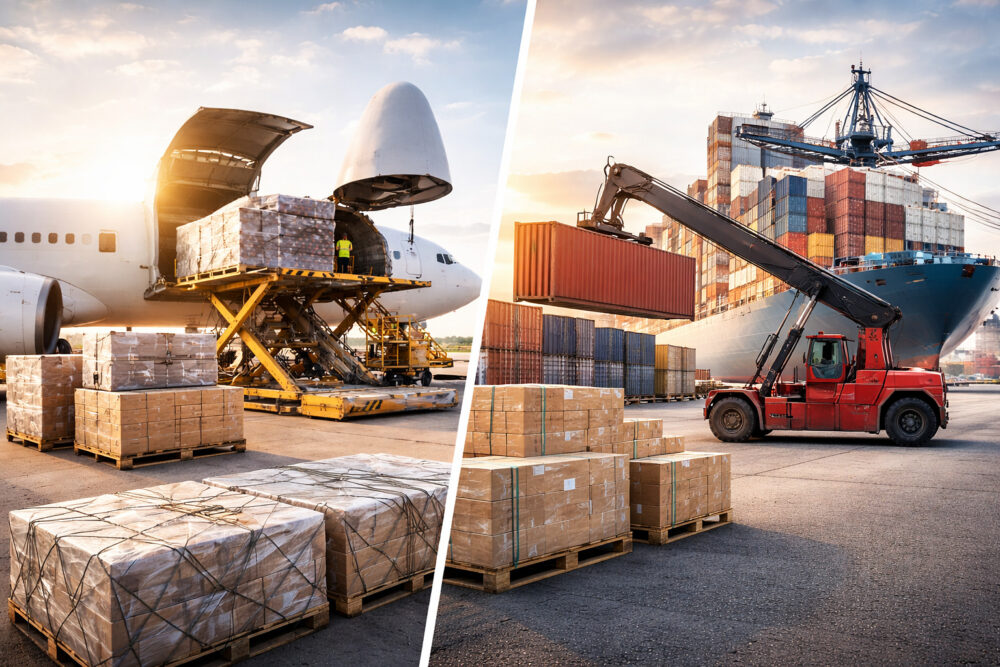
For many small businesses, shipping is one of the most important yet challenging parts of operations. Whether a company sells products internationally or sources components from overseas suppliers, the choice of shipping method affects costs, delivery reliability, and customer satisfaction. Two common options are standard shipping and air cargo.
Standard shipping usually refers to surface transport such as truck, rail, or sea freight. These options are generally less expensive and suitable for large volumes of non-urgent goods. Air cargo, by contrast, uses aircraft to move freight and is primarily valued for speed.
Key Differences Between Air Cargo and Standard Shipping
Speed and Delivery Times
Transit time is the most visible difference. Standard shipping can take days or weeks, depending on the distance and mode of transport. For example, ocean freight between Asia and Europe or North America often requires 20–40 days of port-to-port transit under typical conditions. Ground transportation within a region is faster but rarely matches air transport for long-distance international routes.
Air cargo significantly reduces delivery time. International air freight shipments are often completed within 1 to 7 days, including customs clearance, depending on origin and destination. For small businesses operating in competitive markets, this speed can support faster product launches and quicker restocking cycles. Logistics providers, including companies such as AC Global Services DWC-LLC, offer air freight solutions that make this transport mode available to growing enterprises as well as larger corporations.
Cost Structure and Budget Impact
Air cargo is generally more expensive per kilogram than sea or road transport. Industry data consistently shows that air freight rates are multiple times higher than ocean freight when calculated by weight. This makes standard shipping more suitable for heavy, low-margin, or non-urgent goods.
However, transport costs should be evaluated within the broader financial context. Faster delivery can reduce warehousing requirements, lower inventory holding costs, and minimize the risk of stock shortages. In certain situations, higher shipping expenses may be offset by improved cash flow or reduced operational disruptions.
Reliability and Risk Management
Standard shipping is exposed to various external factors. Ocean freight may face port congestion, labor shortages, or adverse weather conditions. Road transport can be affected by traffic delays or regulatory inspections. Air freight typically operates on structured airline schedules, which can increase predictability for time-sensitive deliveries.
Although air transport is not immune to disruption, it is frequently selected for high-value or urgent shipments where delays would have significant financial consequences.
Choosing the Right Shipping Strategy
Air cargo may be appropriate when:
-
Delivery deadlines are strict
-
Goods are high in value or perishable
-
Fast inventory turnover is essential
Standard shipping remains practical when:
-
Cost control is the primary priority
-
Goods are bulky or heavy
-
Delivery timelines are flexible
Conclusion
Air cargo and standard shipping serve different strategic purposes. Air freight offers speed and greater schedule control, while standard shipping provides cost efficiency for bulk transport. For growing small businesses, the most effective approach often involves combining both methods. Understanding when to use each option helps companies balance cost, reliability, and customer expectations as they scale.