
Inside the Vietnam–UAE Air Cargo Corridor: What Happens at Each Stage
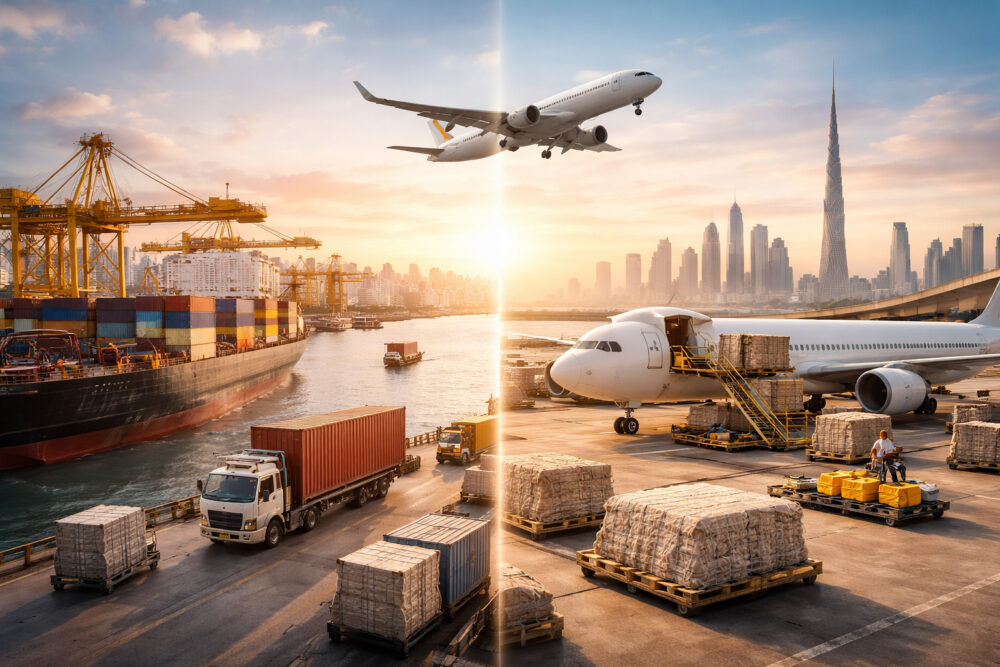
The movement of goods between Southeast Asia and the Middle East is rarely a simple point-to-point process. Behind every shipment is a chain of decisions and operations that affects speed, cost, and reliability. The Vietnam–UAE air cargo corridor shows how modern logistics works when timing matters and several stages have to fit together without errors.
This route links Vietnamese production centers with the UAE, which serves not only as a destination market but also as a regional distribution point. That makes the corridor important for cargo that needs fast handling and predictable delivery.
How the Vietnam–UAE Air Cargo Process Is Organized
A shipment on this route involves much more than loading goods onto a plane. To understand how air freight Vietnam – UAE works in practice, it helps to look at the full chain from pickup to final delivery.
In most cases, cargo passes through several stages: collection at origin, export preparation, airport handling, air transport, import clearance, and last-mile delivery or redistribution. The flight is only one part of that process. Delays often appear before departure or after arrival, not only in the air.
Stage 1: Pickup and Export Preparation
The process starts at the shipper’s warehouse or factory. Goods are packed, labeled, weighed, and prepared for export documents.
This stage matters more than many companies expect. If packaging does not match cargo requirements or documents contain errors, the shipment may be held before it even reaches the aircraft.
Stage 2: Airport Handling in Vietnam
After pickup, the cargo moves to the airport terminal. There it goes through acceptance checks, security screening, and export procedures.
Shipments are often consolidated with other cargo to use available capacity efficiently. This is standard practice in air freight, but it means timing depends not only on one shipment, but also on terminal operations and flight planning.
Stage 3: Flight and Transit Operations
The air segment is usually the fastest part of the route. But not every shipment travels on a direct service. Some cargo moves through transit hubs, depending on schedule, capacity, and airline routing.
That is why transit time and delivery time are not the same thing. A fast flight can still be followed by handling time during transfer or after landing.
Stage 4: Arrival and Import Clearance in the UAE
Once the shipment arrives, it still has to pass through import procedures. Documents are checked, cargo may be inspected, and release depends on compliance with local requirements.
For some goods, this stage is routine. For others, especially regulated or sensitive cargo, it may require more attention and more time.
Stage 5: Final Delivery or Regional Redistribution
The last stage is delivery to the consignee, but in the UAE the shipment may also continue to another point in the region. This is one reason the corridor matters: it often functions as part of a wider logistics network, not as a simple end-to-end lane.
Why the Full Chain Matters
Air cargo is associated with speed, but speed depends on coordination. A missed document, late pickup, or delay in clearance can affect the whole shipment.
For businesses, understanding each stage helps with planning, cost control, and risk reduction. Reliable air freight is not just about flying faster. It is about managing every link in the chain with fewer mistakes and less uncertainty.
Conclusion
The Vietnam–UAE air cargo corridor is built on a sequence of connected stages, each with its own role in the final result. From export preparation to arrival and onward distribution, every step affects how smoothly cargo moves.
Looking at the full process gives a more realistic picture of international air freight. It also shows why route efficiency depends on coordination just as much as on flight time.